
Work related stress is defined as a ‘harmful reaction people have to undue pressures and demands placed on them at work’. As many of us know, it can majorly affect work life but it can also be damaging to your personal life‘. It is therefore important to recognise and take action against the unmanageable stress that is placed on yourself and employees.
The most common causes of work-related stress (from the Labour Force Survey) is workload, tight deadlines and the pressure of responsibility. Other contributory factors were lack of managerial support, role uncertainty and violence.
There is a tendency to normalise stress at work. Employers and management are guilty of providing inadequate employee support and ignoring the warning signs of struggling staff members. Moreover, we often see companies boasting about their staff who work overtime in order to complete expectations. This unfortunately enforces the idea that in order to succeed, reliable employees should be expected to work long overtime hours. As a result, more employees will suffer from stress related illnesses that they feel they cannot openly share due to the work load they are engaged in.
Here are a few red flags to look out for in your workplace…
- Notably high staff turnover
- Common sickness absence throughout the workplace
- Lots of small mistakes being made
- Regular arguments within the workplace
- Low staff morale and performance
In a study done by the Mental Health Foundation, 74% of people have felt so stressed that they have been overwhelmed or unable to cope with work. This obviously creates a snowball effect in which we see a rise in mental health issues such as depression, which in fact, 51% of adults reported they experienced as a direct result of stress.
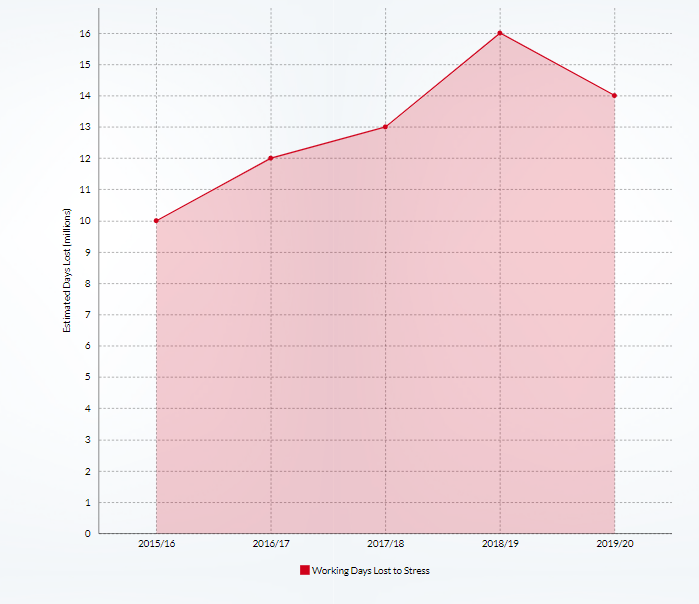
Increasing pressures in the workplace has seen a rise in the last few years in the amount of people taking time off work due to self-reported stress at work, depression or anxiety (see graph).
There are, however, ways to reduce this…
- Whether it’s with a manager at your work or with a doctor, close friend or family member. Talking about how stress is affecting you is the first major hurdle.
- Employers need to ensure that there are mental health measures in place. Mental health posters, a stress-free safe space and employing a member of staff who is educated on mental health are all ways in which you can support your employees.
- Take time to recharge. Make sure that you are switching off from work when you are not in engaged in work-related activities. Don’t let your annual leave days go to waste and make sure you take time to do things that you enjoy.
There are many techniques to combat stress but don’t overlook the most important one, talking. This goes for both employees and employers. It is important to establish a safe working environment where colleagues can share their thoughts and ideas. It is vital for companies to prioritise staff mental health. After all, staff are your most valuable resource.
